

Residential Treatment
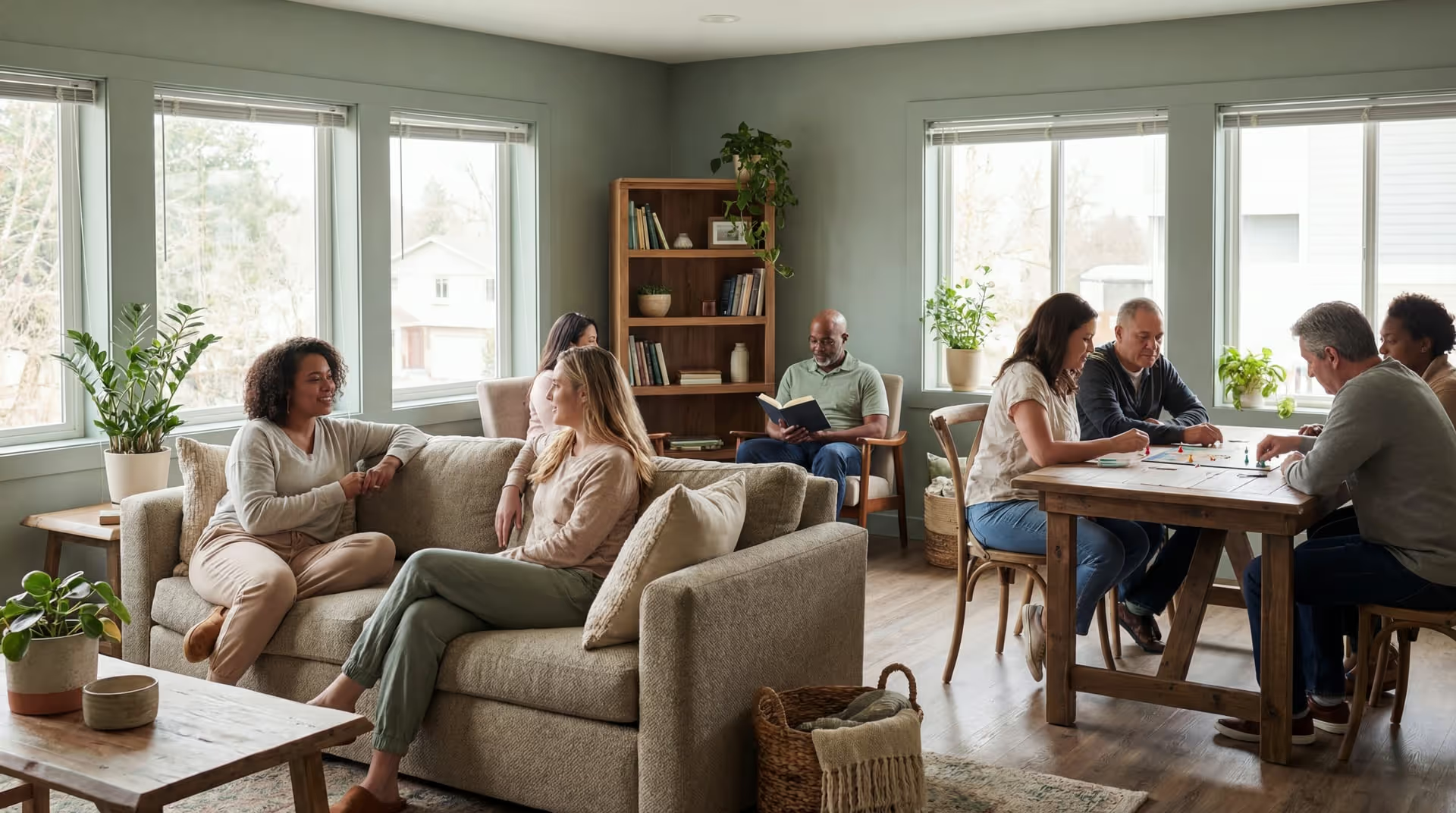

Residential treatment is a level of behavioral health care in which patients live at a treatment facility full-time while receiving structured therapeutic services, typically for 30 to 90 days. Also known as inpatient rehabilitation, residential treatment provides 24-hour supervision and support for individuals with substance use disorders, severe mental health conditions, or co-occurring disorders who need a controlled therapeutic environment.
How Residential Treatment Works
Residential programs provide a comprehensive daily schedule that includes individual therapy, group therapy, psychoeducation, recreational therapy, life skills training, and medication management. Patients reside on-site with access to clinical staff around the clock. Programs are staffed by multidisciplinary teams including psychiatrists, addiction medicine physicians, licensed therapists, nurses, and behavioral health technicians.
Treatment intensity and programming vary by facility, but most residential programs deliver 25-40 hours of structured clinical activities per week. Evidence-based modalities commonly used include CBT, DBT, trauma-informed care, motivational enhancement therapy, and 12-step facilitation.
Levels of Residential Care
ASAM defines four Level 3 sublevels along the residential/inpatient continuum: Level 3.1 (clinically managed low-intensity residential), Level 3.3 (clinically managed population-focused high-intensity residential), Level 3.5 (clinically managed high-intensity residential), and Level 3.7 (medically monitored intensive inpatient). Levels 3.1-3.5 are residential; Level 3.7 is inpatient and adds 24-hour medical/nursing services.
Admissions and Census Management
Residential facilities must balance clinical capacity with financial sustainability. The admissions process involves insurance verification and benefits checking, clinical screening for appropriateness, pre-authorization from payers, bed availability coordination, and intake scheduling. CRM and admissions management tools help facilities track referral sources, manage the inquiry-to-admission pipeline, and optimize census.
Billing for Residential Treatment
Residential treatment is typically billed using per-diem rates that include room, board, and core clinical services. Additional services such as individual therapy sessions, psychiatric evaluations, and lab work may be billed separately. Utilization review is intensive — many payers require concurrent reviews every three to seven days. Accurate documentation of medical necessity at each review point is critical for maintaining authorization and preventing claim denials.
Operational Technology
Residential facilities rely on EHR systems for managing complex workflows: tracking bed assignments and census, scheduling multiple daily sessions per patient, documenting group and individual services, coordinating medication administration, and managing concurrent review timelines. Integrated RCM functionality ensures that all billable services are captured and submitted promptly.
FAQs
How long is a typical residential treatment stay?
Most residential treatment programs last 30 to 90 days, though some specialized programs offer short-term (14-28 day) or long-term (6-12 month) options depending on clinical need and payer authorization.
What is the difference between residential treatment and inpatient hospitalization?
Residential treatment focuses on therapeutic rehabilitation in a structured living environment, while inpatient hospitalization (ASAM Level 4) provides acute medical and psychiatric stabilization with 24-hour medical care.
How is residential treatment authorized by insurance?
Most insurers require pre-authorization based on clinical criteria (often ASAM or InterQual), followed by concurrent reviews every three to seven days to continue authorization. Denial rates increase without thorough documentation of medical necessity.
What happens after residential treatment?
Patients typically step down to a Partial Hospitalization Program (PHP) or Intensive Outpatient Program (IOP), along with sober living arrangements. Effective discharge planning begins at admission and includes relapse prevention, outpatient referrals, and community support connections.
Learn More
- Substance Abuse Billing Guide — Residential billing codes and per diem rates
- Best EHR for Addiction Treatment — EHR systems for level-of-care transitions
- Prior Authorization Guide — Managing residential authorization and concurrent reviews