

Florida Crisis Stabilization Unit: DCF and AHCA Licensing
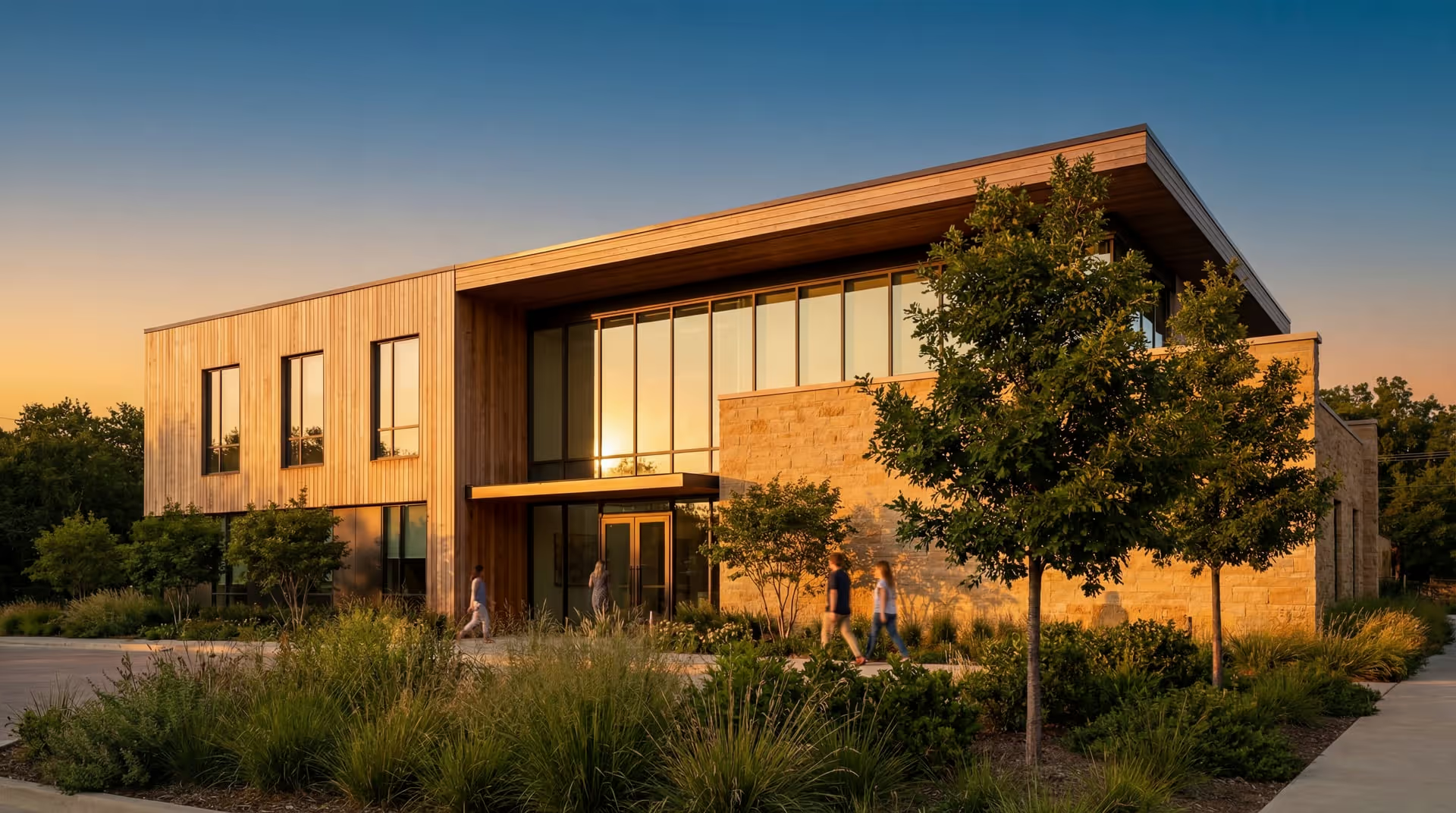

Open a Florida crisis stabilization unit in order: DCF Baker Act designation, DCF bed funding, then AHCA licensure, fees, renewals and ownership changes.
As of October 2026. Florida's agencies update licensure pages, forms and Baker Act rules on their own schedules, so re-check each source cited here before you file.
Opening a crisis stabilization unit (CSU) in Florida is a two-agency project with a fixed order. A Florida CSU is licensed by the Agency for Health Care Administration (AHCA), but AHCA will not license it until the Department of Children and Families (DCF) has designated it as a Baker Act receiving facility, and new or added beds need written proof that DCF supports and funds them. Get that sequence wrong and the opening date slips by months, because each agency runs its own application, its own lead times and its own renewal clock.
This guide is for the executive director, CEO or compliance lead of a community behavioral health organization that is adding crisis capacity. It covers the facility path: designation, licensure, funding, accreditation, renewals and the events that reopen your paperwork. It does not cover clinical Baker Act procedure. For the wider picture of Florida licensing, billing and reporting, start with our Florida behavioral health hub.
Two agencies, one fixed order
AHCA's licensure page states the order plainly: CSUs are "designated as a Baker Act Receiving Facility by the Department of Children and Families" before AHCA licenses them (AHCA, Crisis Stabilization Units). The same AHCA page adds that a short-term residential treatment facility (SRT) has to be affiliated with a designated Baker Act receiving facility before it can be licensed.
DCF's rule reaches the same point from the other side. Rule 65E-5.350, F.A.C., says a facility may not hold or treat a person involuntarily under the Baker Act "until licensed by AHCA and designated in accordance with this rule chapter" (Fla. Admin. Code r. 65E-5.350). In practice, that gives you three tracks that run in parallel and gate each other:
- DCF designation. Form CF-MH 3125, submitted through DCF's electronic licensing and designation system.
- DCF funding support. A letter, or a copy of a current DCF funding contract, showing DCF supports the beds and has funding appropriated for them.
- AHCA licensure. The licensure application, per-bed fee, supporting documents and a satisfactory survey.
The authority behind DCF's role is section 394.461, Florida Statutes, which lets DCF designate and monitor receiving facilities and suspend or withdraw a designation (s. 394.461, F.S.). One common misreading is worth correcting early: DCF designates the CSU, while AHCA licenses it. DCF's licensure chapter for substance use services, Chapter 65D-30, F.A.C., is a separate track that does not license a CSU.
Which facility types can be designated as receiving facilities
Rule 65E-5.350(2) limits eligibility for receiving facility designation to four facility types:
- Hospitals.
- Crisis stabilization units.
- Children's crisis stabilization units.
- Short-term residential treatment facilities that are connected to a county or regional behavioral health receiving system and programmatically integrated with a designated CSU or children's CSU.
For a community provider, that means a standalone SRT is not a shortcut into the Baker Act system. The SRT path depends on an existing designated CSU in the same receiving system. If your plan is a CSU with an SRT step-down, design both programs together and sequence the CSU first.
The same rule says designated receiving facilities contribute data to the Florida Health Information Exchange Encounter Notification Service through AHCA. Build that connection into your IT plan before go-live rather than after the first survey. If the CSU will share an EHR with your other sites, the same plan is the place to run multi-location EHR permission test cases for the roles that will cover the unit.
How do I open a crisis stabilization unit in Florida? The short answer
Here is the order most operators follow, using the lead times in the cited sources:
- Confirm the local need and the funding conversation with DCF and your regional managing entity, since AHCA will ask for proof that DCF supports and funds the beds.
- File for DCF designation on form CF-MH 3125 through DCF's electronic licensing and designation system.
- Assemble the AHCA licensure file with the DCF designation certificate and the DCF funding letter included.
- Submit the AHCA application at least 60 days before your target effective date, then pass the licensure survey.
- Open only after the license issues. AHCA's page notes that a valid license is in place before services start.
The rest of this guide covers what sits inside each of those steps.
AHCA application: documents, survey, per-bed fee and 60-day lead time
AHCA treats new facilities and reactivations of expired licenses as initial applications. The application, fees and supporting documents go in at least 60 days before the effective date. Once the file is complete and acceptable, AHCA schedules a licensure survey, and the license issues after the survey is documented as successful.
AHCA's checklist for an initial CSU application includes:
- AHCA Form 3180-1003 (Health Care Licensing Application) and Form 3110-1024 (Application Addendum).
- Business articles as filed with the Florida Department of State.
- Proof of the right to occupy the premises, local zoning compliance documentation and, for new construction, a certificate of occupancy.
- A program description covering services, population, age groups, services to minors and a staffing pattern with names and license numbers of licensed staff.
- A table of organization and the facility manager's resume.
- A certificate of insurance showing at least $300,000 per incidence and $1 million in aggregate.
- A copy of the DCF Baker Act receiving facility designation certificate.
- Proof of DCF funding and support for the beds requested.
- Satisfactory fire safety and sanitation inspection reports completed within the last 365 days.
- A management agreement, if a management company runs services.
The licensure fee on AHCA's page is $197.92 per bed for initial, renewal and change of ownership applications, with the same per-bed amount for a capacity increase. AHCA also lists a level 2 background screen for the administrator and the chief financial officer, repeated every 5 years. If you plan beds in phases, model the fee and the DCF funding letter for each phase, since added beds go through their own application.
DCF funding support for beds
The funding letter is the step new operators most often underestimate. AHCA's checklist asks for a DCF letter verifying that DCF has funding appropriated to support the beds requested and whether that funding is recurring or non-recurring. A copy of the current DCF funding contract can stand in for the letter.
The same proof comes back in two later events. Adding beds to an existing license calls for the per-bed fee plus DCF documentation supporting the added beds and their funding, and the added beds cannot be used until AHCA issues a license authorizing them. A relocation that changes the county also calls for DCF documentation that it supports the move and has funding appropriated for the beds. For a multi-site organization, this means your capacity plan and your DCF contract negotiations belong on the same calendar.
Designation and license renewal cycles
The two credentials renew on different clocks, so track them as separate deadlines.
DCF designation. Under rule 65E-5.350(5), renewal designation is filed for every 3 calendar years, with the renewal application at DCF at least 60 calendar days before the existing designation expires. The certificate of designation shows its effective and expiration dates and is displayed at the service site.
AHCA license. Section 408.806, Florida Statutes, sets the renewal window at "at least 60 days but no more than 120 days before the expiration" of the current license (s. 408.806, F.S.). An application received more than 120 days early is returned. Late filing costs $50 per day, capped at the lesser of 50 percent of the licensure fee or $500. AHCA's page warns that an expired license cannot be renewed; the facility files a new initial application instead. The same statute says Chapter 408 licenses are biennial unless the license category sets a shorter period, so confirm the expiration date printed on your license and put it on the calendar the day it arrives.
A practical tip: section 408.806(9) lets a licensee holding several AHCA licenses ask to align their expiration dates. Multi-site operators with more than one AHCA-licensed program may find that simpler to manage.
Accreditation and deemed status
Accreditation is voluntary in Florida, but it changes your survey burden. AHCA says accredited CSUs and SRTs that meet section 394.741, Florida Statutes, may be deemed in compliance with licensure requirements and are not scheduled for routine on-site licensure surveys. AHCA lists CARF, the Council on Accreditation and The Joint Commission as deemed for state licensure.
Deemed status comes with a filing duty. AHCA asks for a complete copy of the most recent accreditation survey report, with the survey dates, accreditation status and type, any citations with your responses, the effective date and any follow-up reports. AHCA notes the report becomes part of the public facility file. A facility that loses accreditation, holds a status other than accredited or does not send the report goes back to annual licensure surveys by AHCA field office staff.
Co-locating detox and a CSU: the stricter staffing rule applies
Many community organizations want withdrawal management and crisis stabilization in the same building. Florida's detox standards plan for that arrangement, and the staffing math changes. Rule 65D-30.006(3)(d), F.A.C., sets per-shift staffing for nurses and nursing support personnel in inpatient detoxification by licensed bed capacity (1 nurse and 1 nursing support for 1 to 15 beds, 1 and 2 for 16 to 20 beds, 2 and 2 for 21 to 30 beds). Where an inpatient detox component and a licensed CSU are co-located, the rule says the staffing requirement for the combined components follows that of "the component with the more restrictive requirements" (Fla. Admin. Code r. 65D-30.006). That provision addresses staffing only.
Two consequences follow for planning. First, compare the CSU minimum staffing standards in rule 65E-12.105, F.A.C., against the detox table before you set a combined staffing pattern, and staff to whichever is tighter. Second, the detox component still needs its own DCF substance use license, so a co-located campus carries a DCF license, a DCF designation and an AHCA license at once. Our guide to ASAM levels of care is a useful companion when you map which services sit under which credential.
Relocation, bed changes, ownership changes and surrendering a designation
Several ordinary business events reopen both agencies' files.
Relocation. Rule 65E-5.350(5)(a) asks for a DCF designation application 90 calendar days before a facility relocates. On the AHCA side, a new address calls for an application plus proof of the right to occupy, and a change of county calls for DCF funding documentation.
Bed changes. As covered above, added beds need the per-bed fee, DCF support and funding documentation, and an updated AHCA license before use.
Change of ownership. Section 408.803(5), Florida Statutes, defines a change of ownership two ways: a transfer evidenced by a change in federal employer identification number or taxpayer identification number, or a transfer of 51 percent or more of ownership, shares, membership or controlling interest. The statute excludes "a change solely in the management company or board of directors" from that definition (s. 408.803, F.S.). Under section 408.807, the seller notifies AHCA in writing "at least 60 days before the anticipated date of the change of ownership" (s. 408.807, F.S.), and section 408.806(2)(b) puts the buyer's application at AHCA at least 60 days before the change. AHCA's checklist adds a closing document signed by both parties, a statement of outstanding deficiencies and a statement of outstanding payments.
DCF re-designation is a separate filing. Rule 65E-5.350(5)(c) asks for a re-designation application within 30 calendar days of a change of ownership, controlling ownership or the contractual management entity for the psychiatric service. Note that the DCF trigger includes a change in management entity, while the AHCA definition excludes a change solely in the management company. Run both tests on any deal.
Surrendering a designation. Rule 65E-5.350(7) asks for 120 days written notice to DCF, with a transition plan that addresses the reasons, coordination with the regional managing entity and surrounding counties, the last date for Baker Act examination admissions, and transfer and referral agreements. Separately, AHCA asks for at least 30 days notice before a licensee discontinues operation.
Rule currency. The version of rule 65E-5.350 we read shows an effective date of December 28, 2023. Section 394.461 was amended afterward by chapter 2024-245, Laws of Florida, so check the Florida Administrative Code history for 65E-5.350 and 65E-5.353 before you file.
Where Ease fits
Once the unit opens, the operational work is tracking beds and placements across sites. Ease includes a per-location bed board with bed statuses and a projected availability count driven by each occupant's estimated discharge date. Admins configure which sites offer each level of care so clinicians see the relevant options, and a client's detox, residential and outpatient placements stay in one chart. For more on day-to-day census practice, see our guide to bed management and census for residential behavioral health, and for organizations running several locations, our overview of EHRs for multi-state behavioral health groups.
Key takeaways for Florida CSU operators
- DCF designates, AHCA licenses, and AHCA's page puts designation first.
- DCF's funding letter gates the initial license, added beds and county relocations.
- File the AHCA initial application at least 60 days ahead and expect a survey before opening.
- Track two renewal clocks: DCF designation every 3 calendar years and the AHCA renewal window of 120 to 60 days.
- Treat ownership and management changes as both an AHCA and a DCF event.
- Re-check every rule and page cited here before filing, since Florida updates them without notice.
Frequently Asked Questions
Which Florida agency licenses a crisis stabilization unit?
The Agency for Health Care Administration (AHCA) licenses crisis stabilization units. The Department of Children and Families (DCF) does not license the CSU, but AHCA's licensure page says a CSU has to be designated by DCF as a Baker Act receiving facility before AHCA will license it.
How far ahead should I file the AHCA application for a new Florida CSU?
AHCA asks for the initial application, fees and supporting documents at least 60 days before the effective date. A licensure survey is scheduled after the file is complete, and the license is issued only after a successful survey, so most operators plan on more than 60 days.
What does an AHCA crisis stabilization unit license cost in Florida?
AHCA's CSU and SRT page lists the initial, renewal and change of ownership fee as $197.92 per bed, and the same per-bed amount for a capacity increase. Late renewal applications add $50 per day, capped at the lesser of 50 percent of the licensure fee or $500.
How often does a Florida Baker Act receiving facility designation renew?
Under rule 65E-5.350, F.A.C., renewal designation is filed for every 3 calendar years, and the renewal application goes to DCF at least 60 calendar days before the existing designation expires. That cycle runs separately from the AHCA license renewal window.
Can an accredited CSU skip AHCA's routine licensure surveys?
Accredited CSUs and SRTs that meet section 394.741, Florida Statutes, may be deemed in compliance and are not scheduled for routine on-site licensure surveys. AHCA lists CARF, the Council on Accreditation and The Joint Commission as deemed for state licensure. The facility still sends AHCA its most recent accreditation survey report.